Fed's Patience on Rates Amid Sticky Inflation and Robust Manufacturing in 2026
Fed's Patience on Rates Amid Sticky Inflation and Robust Manufacturing
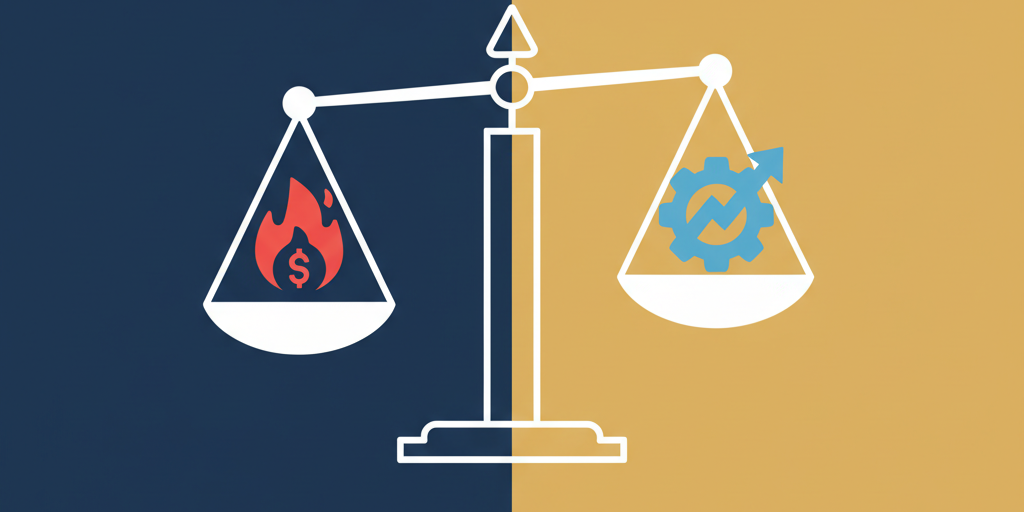
The Federal Reserve is in a delicate balancing act, navigating between persistent inflation and a surprisingly resilient manufacturing sector. As inflation remains stubbornly high, the Fed's choice to maintain interest rates offers a glimpse into its broader economic strategy. The question looms: how long can the Fed afford to be patient in this environment?
Key Takeaways
- The Federal Reserve is maintaining interest rates despite ongoing inflation concerns.
- Manufacturing output has shown unexpected strength, providing a buffer against economic downturns.
- Inflation, while still high, has shown signs of moderating in some sectors.
- Fed officials express optimism about productivity gains stemming from deregulation and tax reforms.
- The central bank is weighing the risks of premature rate hikes against the benefits of economic stability.
- Market reactions to Fed announcements indicate investor concerns about inflation control.
- The Fed’s approach signals a longer-term view on economic growth and inflation management.
The Fed's Current Stance
In recent statements, Fed officials have reiterated their commitment to a measured approach regarding interest rates. This strategy is informed by several factors, including the persistent inflation that has plagued the economy for months. Inflation, which has remained above the Fed's target of 2%, continues to challenge the central bank's efforts to stabilize prices without stifling growth.
Fed Chair Jerome Powell highlighted that while inflation is indeed "sticky," the recent data suggests a potential easing. The latest Consumer Price Index (CPI) report showed modest declines in specific categories, leading some analysts to speculate that the peak inflation may have been reached. However, the Fed remains cautious, emphasizing that a single month of improved data does not equate to a trend.
Manufacturing Resilience
On the other side of the economic coin is the manufacturing sector, which has shown surprising robustness. According to recent reports, manufacturing output has exceeded expectations, driven by strong consumer demand and increased business investments. This sector's health is pivotal; it not only reflects the economy's strength but also serves as a backbone for job creation.
The resilience of manufacturing could provide the Fed with more leeway in its decision-making process. As businesses ramp up production in response to an optimistic economic outlook, the Fed might find itself reassured that it can afford to hold off on rate hikes without immediately fearing a recession. In essence, a strong manufacturing base could mitigate some inflationary pressures while bolstering employment figures.
Diverging Views on Inflation and Growth
Some Fed officials, like Richmond Fed President Thomas Barkin, have pointed to potential productivity gains as a counterbalance to inflation. Barkin has argued that ongoing deregulation and tax reforms could enhance productivity, allowing the economy to grow without exacerbating inflation. This perspective introduces a layer of complexity to the Fed's decision-making process, as it weighs the potential benefits of a growing economy against the risks of inflation spiraling out of control.
Yet, the Fed's patience is not without its critics. Some economists and market analysts warn that prolonged inaction could lead to a more entrenched inflation scenario, making it more challenging to control later. The fear is that the longer the Fed waits to address inflation, the more painful the necessary corrections will be.
Market Reactions and Future Implications
Financial markets have reacted cautiously to the Fed's stance. Investors are keeping a close eye on inflation metrics and Fed communications, aware that any misstep could lead to volatility. The bond market, in particular, has shown signs of nervousness, with yields fluctuating as traders grapple with the uncertainty surrounding future rate hikes.
The implications of the Fed's decisions extend beyond financial markets. Consumer behavior is also affected; if households sense that inflation will remain elevated for an extended period, they may adjust their spending habits, potentially slowing economic growth. The Fed's challenge lies in fostering an environment where consumer confidence can thrive while ensuring inflation does not become a long-term concern.
Conclusion
As the Fed navigates this complex landscape, its patience will be tested. The balance between managing inflation and supporting economic growth will require a nuanced approach. The central bank's current strategy reflects a belief in the underlying strength of the economy, but the path forward is fraught with uncertainties. In this critical moment, the Fed's decisions will shape not only the future of the economy but also the everyday lives of millions of Americans. The unfolding scenario serves as a reminder that economic policy is as much an art as it is a science, requiring constant reassessment and adaptation.