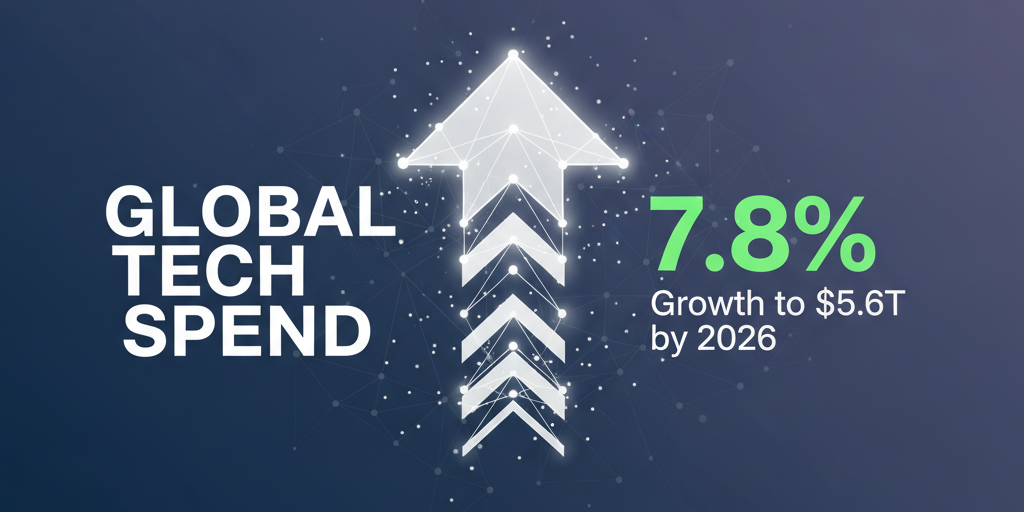
Forrester Forecasts 7.8% Global Tech Spend Growth to $5.6T in 2026
Forrester Forecasts 7.8% Global Tech Spend Growth to $5.6T in 2026
As the digital landscape continues to evolve, the financial commitment to technology is set to soar. Forrester Research has predicted that global technology spending will grow by an impressive 7.8%, reaching $5.6 trillion by 2026. This growth isn't just a statistic; it's a reflection of businesses adapting to a rapidly changing environment.
Key Takeaways
- Global technology spending is projected to hit $5.6 trillion in 2026, representing a 7.8% increase.
- Companies are prioritizing investments in cloud services, AI, and cybersecurity to enhance operational efficiency.
- The demand for digital transformation is driving spending across various sectors including healthcare, finance, and retail.
- Emerging markets are contributing significantly to growth, with increased tech adoption in regions like Asia-Pacific and Latin America.
- The tech hiring landscape is also shifting, with companies seeking talent skilled in data analytics and machine learning.
- Sustainability is becoming a key factor in tech investments, as organizations aim to reduce their carbon footprint.
- The rise of remote work is prompting businesses to invest in collaboration tools and infrastructure.
Understanding the Growth Drivers
Digital Transformation at the Forefront
Organizations are no longer just using technology; they are embedding it into their core strategies. The pandemic accelerated this shift, pushing companies to adopt digital solutions rapidly. From cloud computing to artificial intelligence, these technologies are no longer optional but essential.
For example, firms in the healthcare sector are investing heavily in telehealth solutions. This trend is not just about convenience; it’s about providing timely care and improving patient outcomes. The financial services industry is also seeing a similar push, with banks and fintech companies investing in advanced data analytics and cybersecurity measures to protect sensitive information.
The Role of Emerging Markets
While North America and Europe have been the traditional powerhouses of technology spending, emerging markets are catching up fast. Regions like Asia-Pacific and Latin America are witnessing a tech boom, driven by increased internet penetration and mobile device usage.
In Brazil, for instance, the growth of e-commerce has spurred investments in logistics technology and payment systems. Similarly, in India, the government’s push for digital initiatives is encouraging startups and established companies alike to ramp up their tech spending.
Talent Acquisition and Skills Gap
As technology spending rises, so does the demand for skilled professionals. Companies are now on the lookout for talent proficient in data analytics, machine learning, and cybersecurity. The skills gap poses a challenge; organizations must invest in training and development to equip their workforce with the necessary skills.
Moreover, the tech landscape is becoming increasingly competitive. Businesses are not just competing for market share but also for top talent. Companies that can offer flexible work environments and opportunities for growth will have the edge in attracting skilled professionals.
Sustainability in Tech Investments
Sustainability is no longer just a buzzword; it’s becoming a critical factor in tech investment decisions. Companies are increasingly focusing on environmentally friendly technologies, from energy-efficient data centers to sustainable supply chains.
For instance, major tech firms are committing to reducing their carbon footprints and investing in renewable energy sources. This shift is not only good for the planet but also resonates with consumers who prefer to support environmentally responsible businesses.
Remote Work and Collaboration Tools
The rise of remote work has significantly influenced tech spending patterns. Businesses are investing in collaboration tools and infrastructure to support distributed teams. Platforms like Zoom, Microsoft Teams, and Slack have become essential for maintaining productivity and communication.
Moreover, companies are also looking to enhance cybersecurity measures as remote work presents new challenges. Protecting sensitive data while ensuring seamless collaboration is a top priority for organizations.
Conclusion
Forrester's forecast of a 7.8% growth in global tech spending to $5.6 trillion by 2026 is more than just a number; it’s indicative of a broader transformation in how businesses operate. As companies invest in digital transformation, emerging markets, and sustainability, the future of technology appears vibrant and full of potential.
This is a pivotal moment for organizations. The challenge lies not just in keeping pace with technological advancements but in leveraging them effectively to drive growth and innovation. The question for leaders is not if they will invest in technology, but how strategically they will do so to remain competitive in an ever-evolving landscape.